
Rain
STAY UPDATED!
Click “SUBSCRIBE” to receive LA County’s El Niño Preparedness Guide.
Los Angeles County is getting ready for a possible wet winter due to El Niño. We are urging residents to prepare now for the heightened potential of severe storms. Here’s what El Niño could mean for our region, the steps the County is taking and the actions you can take now to protect your household.
What is El Niño?
El Niño is a naturally occurring climate pattern that warms the Pacific Ocean. The warmer the water, the more it evaporates — building massive storm clouds overhead. This means a greater chance of heavier rain and back-to-back storms in Southern California.
While a wet winter isn’t guaranteed, the odds are elevated. Storm season officially begins mid-October and typically lasts through early spring.
1. How You can Prepare?
A little preparation goes a long way:
Get connected. Sign up for emergency alerts at ready.lacounty.gov.
Have a plan. Create an evacuation plan that meets your specific needs.
Secure your property. Clean out gutters, downspouts and storm drains and repair roof leaks before the storm hits.
Stock sandbags. Pick up sandbags before storms. Find them near you.
Consider flood insurance. Standard homeowners’ insurance does not cover flood damage. It’s a separate policy that can take at least 30 days to go into effect, so signing up early is critical if you live in a higher flood risk area. Learn more.
2. Helpful Resources
Alerts & updates: Visit ready.lacounty.gov for alerts, preparedness guidance, and real-time updates.
Mud & debris flow advice: Call (800) 933-0930 to speak to a Public Works engineer.
Homeowner resource: Download the Homeowners Guide for Flood, Debris and Erosion Control (En Español).
3. Learn More
El Niño
Los Angeles County is getting ready for a possible wet winter due to El Niño. We are urging residents to prepare now for the heightened potential of severe storms. Here’s what El Niño could mean for our region, the steps the County is taking and the actions you can take now to protect your household.
What is El Niño?
El Niño is a naturally occurring climate pattern that warms the Pacific Ocean. The warmer the water, the more it evaporates — building massive storm clouds overhead. This means a greater chance of heavier rain and back-to-back storms in Southern California.
While a wet winter isn’t guaranteed, the odds are elevated. Storm season officially begins mid-October and typically lasts through early spring.
1. How You can Prepare?
A little preparation goes a long way:
Get connected. Sign up for emergency alerts at ready.lacounty.gov.
Have a plan. Create an evacuation plan that meets your specific needs.
Secure your property. Clean out gutters, downspouts and storm drains and repair roof leaks before the storm hits.
Stock sandbags. Pick up sandbags before storms. Find them near you.
Consider flood insurance. Standard homeowners’ insurance does not cover flood damage. It’s a separate policy that can take at least 30 days to go into effect, so signing up early is critical if you live in a higher flood risk area. Learn more.
2. Helpful Resources
Alerts & updates: Visit ready.lacounty.gov for alerts, preparedness guidance, and real-time updates.
Mud & debris flow advice: Call (800) 933-0930 to speak to a Public Works engineer.
Homeowner resource: Download the Homeowners Guide for Flood, Debris and Erosion Control (En Español).
3. Learn More
Rain Safety Tips
- Follow all instructions from emergency responders and emergency alert notifications.
- Ensure your vehicle is safe to operate during wet weather. Make sure your tires, brakes, and windshield wipers are in proper working condition. Drive cautiously and slow down. Many roadways will be wet and slippery.
- Do not attempt to cross flooded areas and never enter moving water. As little as 6 inches of water can knock over and carry away an adult and 18-24 inches of water can carry away most large SUVs, vans and trucks. “Turn around, don’t drown!”
- Stay away from flood control debris basins, channels, facilities and river beds.
- Keep at least 100 feet away from downed power lines and electrical wires. Call 911 to report downed lines.
Stay Informed
- Monitor the Los Angeles County Public Works Mud and Debris Flow Forecast, especially if you live in or near a recent burn area.
- Visit the County’s Emergency Response Page to stay up to date regarding any evacuations, road closures or media releases during active storms.
- View the latest NWS Hazard Summary for current watches, advisories, and warnings. The National Weather Service (NWS) issues weather advisories and watches when the weather forecast indicates there is a potential for hazardous conditions.
- Monitor Ready Los Angeles County on X (formerly Twitter) and local news media for relevant and important updates.
Register for Emergency Alerts
- Register for Alert LA County. Alert LA County is the opt-in mass notification program utilized by the County of Los Angeles that allows individuals to receive emergency alerts by text, email and/or phone call.
- View the list of systems utilized by jurisdictions throughout LA County. Cities, special districts, employers, schools and universities may each have their own emergency notification systems. Be sure to opt-in to your jurisdiction’s alerting system.
Have a Plan and Keep Supplies
- Develop a family plan before any stormy weather occurs. Involve the whole family when making the plan to be sure everyone is familiar. Be sure to customize your plan based on any individual needs.
- Designate an emergency meeting location outside the hazard area. Have important phone numbers documented to quickly contact in case of emergency.
- Identify several different routes to leave your home in case one or more are blocked. Be aware of any creeks, drainages, or other areas that could flood or become hazardous during rainy weather.
- Keep supplies at home and in your car to support you and your family in the event of an emergency (power outage, shelter in place, evacuation, etc.)
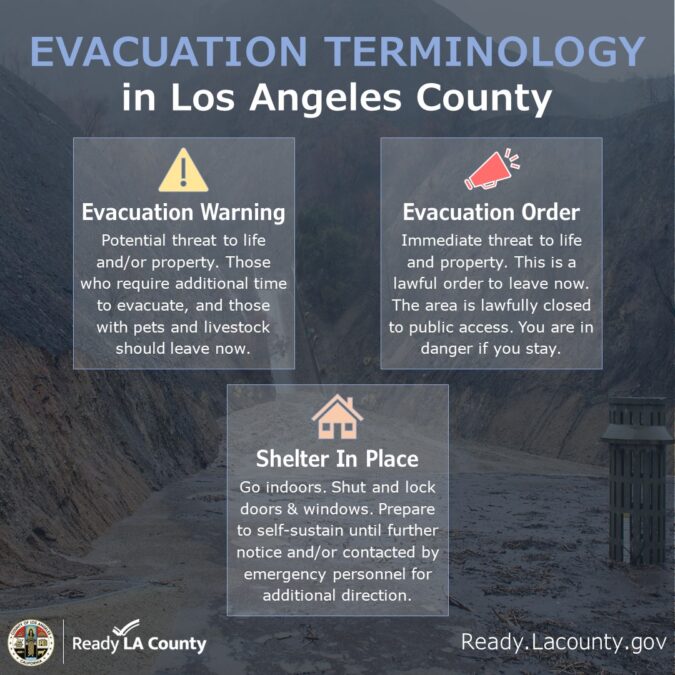
- Familiarize yourself with evacuation terminology utilized in Los Angeles County and be ready to execute your plan if any weather conditions require an Evacuation Warning, Evacuation Order, or Shelter in Place order for your area.
Resources
In need of emergency shelter? Find information on the County’s Winter Shelter program or call 211 for assistance. Adults ages 18 and over who are experiencing homelessness are eligible for the program.

Los Angeles County residents, renters, and business owners, including persons with disabilities and others with access and functional needs, may call 211 LA County for emergency preparedness information, and other referral services. The toll-free 2-1-1 number is available 24 hours a day and seven days a week. 211 LA County services can also be accessed by visiting https://211la.org